Do Soulmate Sketches Use Real Personal Data?
Before ordering a soulmate sketch, many people wonder about privacy. With so many online services collecting and analyzing user information, it’s natural to ask: Do soulmate sketches use real personal data?
The short answer is that soulmate sketch experiences are best understood as symbolic and entertainment-based, not as identity-based tools that verify who you are or “find” a specific person using private records.

This article explains what “personal data” usually means in this context, what is typically requested (and why), what is not accessed, and how to approach the experience with realistic expectations.
What People Mean by “Real Personal Data”
When someone asks if a soulmate sketch uses real personal data, they often mean sensitive or identifying information — the kind used for identity verification, targeted advertising, or private profiling.
Examples of “real personal data” people worry about include:
- Full legal name and identity details
- Government-issued ID numbers
- Exact birth date and precise location
- Biometric or facial recognition data
- Social media account access
- Private relationship or message history
It makes sense to ask about these things, especially because the end result is visual and can feel personal. People sometimes assume a sketch must be “powered” by detailed background information.
But a soulmate sketch experience is not the same as a background check or a data-driven matchmaking system. It’s not designed to confirm identities or locate a real-world individual.
What Information Is Typically Requested
Most soulmate sketch experiences request only limited inputs. These are usually prompts meant to shape the symbolic or artistic direction of the experience, rather than to identify you or collect sensitive records.
Common examples may include:
- First name (or a nickname)
- General preferences or broad themes
- Optional questions about personality traits
- High-level intentions (for example, what you hope to understand)
These inputs work more like creative guidance than “data mining.” In a symbolic experience, prompts help frame the output — similar to how a journal prompt frames reflection, or how a tarot card reading frames a theme without providing verifiable facts.
If you’re deciding whether to try a soulmate sketch, it can help to treat the input step as a way of setting context, not as proof that the experience is using private records.
Why the Result Can Feel Surprisingly Personal
Another reason this question comes up is that some people feel the final sketch “fits” their expectations or triggers an emotional response. That feeling can create a sense that the system must be using personal information behind the scenes.
But emotional resonance doesn’t require deep personal data. People naturally interpret ambiguous visuals in a personal way — especially when they are already thinking about love, connection, and meaning.
In other words, the experience can feel personal because humans are meaning-makers. The sketch can become a mirror for hopes, patterns, and preferences, rather than a literal image of a real person chosen from hidden data.
See an Example Soulmate Sketch Experience
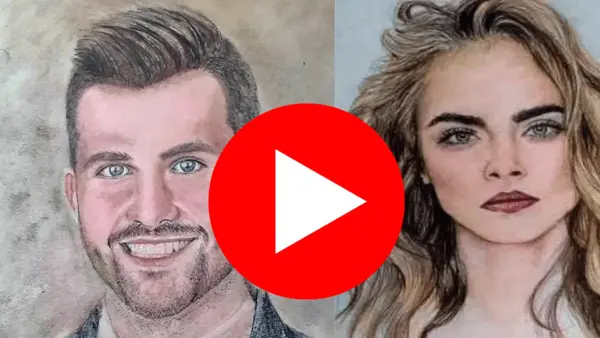
Curious what the experience looks like? You can explore the soulmate sketch process for yourself below.
View My Soulmate SketchFor entertainment and general informational purposes only.
What Soulmate Sketches Do NOT Access
To set realistic expectations, it helps to be clear about what a soulmate sketch is not designed to do. In general, these experiences are not built to access private databases or verify identities.
For example, a soulmate sketch experience is not meant to:
- Scan your social media accounts
- Use facial recognition to match a real person
- Pull from government or private records
- Identify someone you will definitely meet
- Predict specific future outcomes
This is why the healthiest approach is to treat the sketch as a symbolic output — something you can reflect on — rather than a literal “lookup” of a real individual.
How AI Can Be Used Without Personal Profiling
Sometimes the concern comes from the word “AI.” People associate AI with tracking, surveillance, and targeted data systems. But AI can also be used in purely generative and creative ways.
In a symbolic context, AI can produce images based on general patterns and artistic styles. It can respond to prompts and generate an output that feels coherent without needing to identify you or search external sources for private facts.
It’s important to separate “AI that profiles users for advertising” from “AI that generates a creative image from prompts.” Those are very different uses of technology, even though both may use the word “AI.”
Privacy: A Grounded Way to Think About It
Even when an experience is symbolic, it’s still reasonable to be cautious with what you share online. A simple guideline is: provide only what is requested, and avoid oversharing personal details that aren’t needed.
From an expectation-setting perspective, the most useful takeaway is that the experience does not depend on private identity records to “work.” The meaning comes from your interpretation, not from hidden data access.
Why This Question Matters
Asking about personal data is part of approaching the experience responsibly. It helps people avoid two extremes:
- Assuming the sketch is “magic” or predictive because it feels personal
- Avoiding the experience out of fear that it secretly tracks them
A balanced view is to understand the sketch as entertainment and reflection. If it feels meaningful, that meaning is still real to you — but it doesn’t require personal data mining to explain it.
Final Thoughts
So, do soulmate sketches use real personal data? In the way most people worry about — deep identity records, private databases, or surveillance-style tracking — that’s not what this type of experience is designed to do.
Instead, it’s best approached as a symbolic, interpretive experience. The output can feel personal because humans naturally connect meaning to imagery — not because the sketch is pulling hidden information about you or your future.
If you decide to try one, keep your expectations grounded: treat it as entertainment and reflection, not as proof of a real person’s identity or a guaranteed future outcome.
Related Questions Worth Exploring
If you’re questioning what it means when a soulmate sketch doesn’t resonate as expected, these related topics explore accuracy, interpretation, and how personal perspective plays a role.