Can Multiple People Receive Similar Soulmate Sketches?
A common question people ask after seeing different soulmate sketches is whether multiple individuals can receive images that look similar. When this happens, it can raise doubts about personalization or uniqueness.
Understanding why similarities can appear requires looking at how symbolic experiences work and how humans interpret visual information.
This article explains why soulmate sketches can sometimes look alike, what those similarities mean, and how to interpret them realistically.
Why Similarities Can Occur
Soulmate sketches are symbolic illustrations rather than portraits of real people. Because of this, they often rely on generalized features and familiar visual patterns.
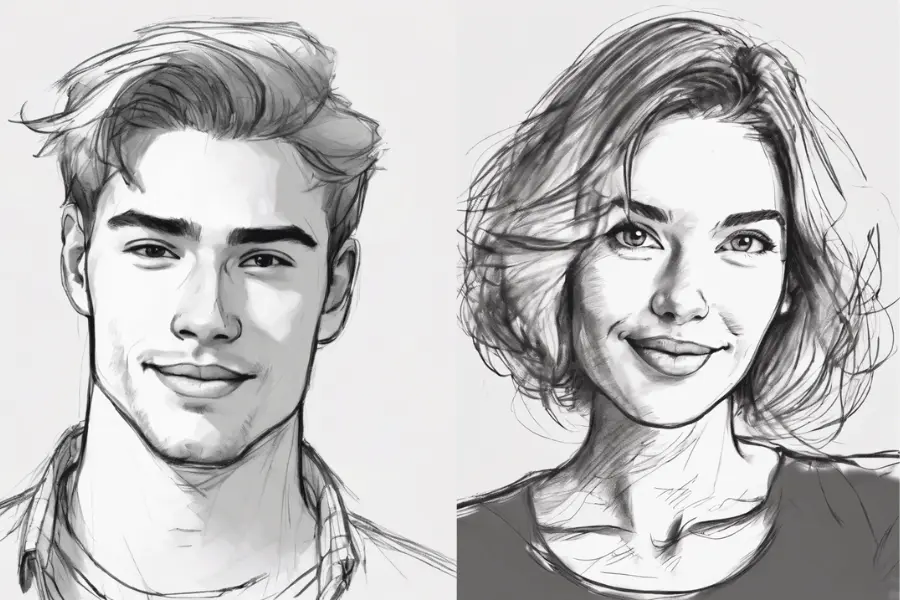
When multiple people receive sketches built from similar symbolic themes, overlaps in appearance can naturally occur.
Similarity does not automatically mean duplication or lack of intent.
The Role of Shared Human Preferences
Many people are drawn to similar qualities when thinking about connection — such as kindness, balance, or warmth.
When these shared preferences are translated into imagery, they may produce sketches that resemble one another on a surface level.
This reflects common values rather than identical outcomes.
Symbolic Images Are Broad by Nature
Symbolic images are designed to be open-ended. They are not meant to capture fine-grained personal detail.
Because of this, different people may see themselves in similar imagery, even if their experiences and interpretations differ.
The meaning comes from reflection, not from visual uniqueness alone.
See an Example Soulmate Sketch Experience
Curious what the experience looks like? You can explore the soulmate sketch process for yourself below.
View My Soulmate SketchFor entertainment and general informational purposes only.
Why Similarity Does Not Mean the Same Outcome
Even when sketches appear similar, people often interpret them in very different ways.
Personal experiences, emotions, and expectations shape what each individual takes from the image.
This is why two people can view similar sketches and find entirely different meaning.
How Expectations Influence Perception
If someone expects a soulmate sketch to be completely unique, any resemblance to other images can feel disappointing.
Recognizing the symbolic nature of the experience helps align expectations with reality.
When Similarity Feels Concerning
Concern usually arises when sketches are treated as literal identifiers rather than symbolic prompts.
Reframing the experience as interpretive often reduces this concern.
Keeping the Experience in Perspective
The value of a soulmate sketch lies in reflection, not exclusivity.
Similarity does not remove meaning — it highlights shared human themes.
Final Thoughts
Multiple people can receive soulmate sketches that look similar, and this is a natural result of symbolic imagery.
Similarity does not mean the experience is invalid or inaccurate.
When approached with realistic expectations, soulmate sketches can be meaningful even when overlaps occur.
Related Questions Worth Exploring
If you’re unsure whether a soulmate sketch aligns with your intentions or expectations, these related topics can help clarify who tends to benefit most from the experience.